

5 books that forever changed how I think about love
Let's talk about what I'm trying to unlearn
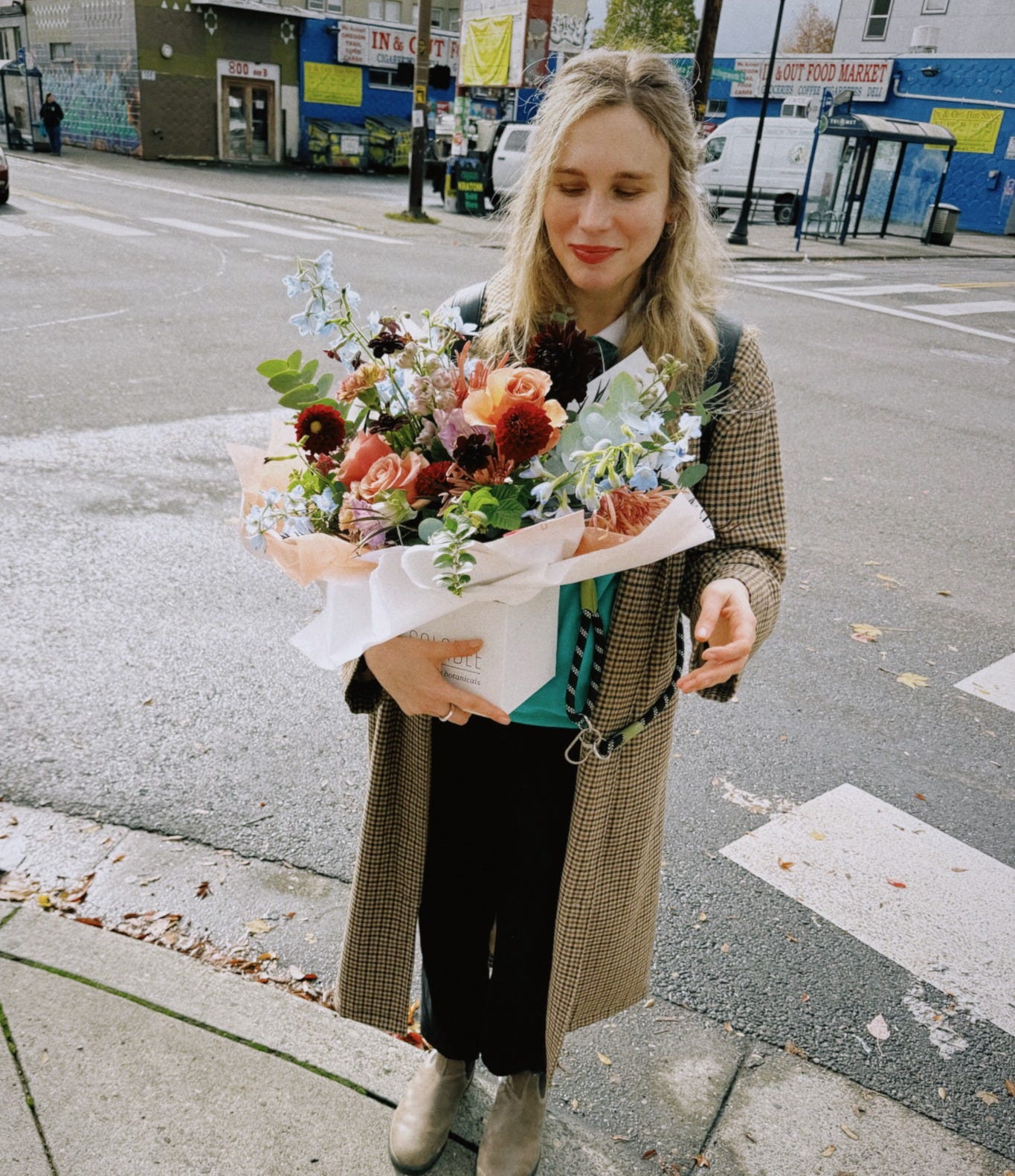
Valentine’s Day celebrates an idealized version of romantic love, the kind wrapped in heart-shaped boxes and pink foil. It’s reminiscent of that intoxicating first stage of falling in love, the part that feels effortless and all-consuming.
When I was younger, I wanted that kind of love more than anything. But as I got older and actually experienced it, I found it often just let me down.
Don’t get me wrong, the beginning of a relationship, the falling part, is incredible. But I think I’ve only ever been in one relationship where we made it meaningfully past that phase. And while there’s a part of me that feels sad about that, I’m grateful I at least have the reference point.
As I’ve started dipping my toes back into dating (very lightly—a topic for another day), one of my biggest priorities is not rushing the beginning. I have an awful tendency to fall too deep too soon, and for a long time, I thought it was because I was just so madly in love. But upon reflection, I’ve realized it happens because I’m codependent. It happens because I don’t take enough initiative to build a satisfying social life outside of a partner.
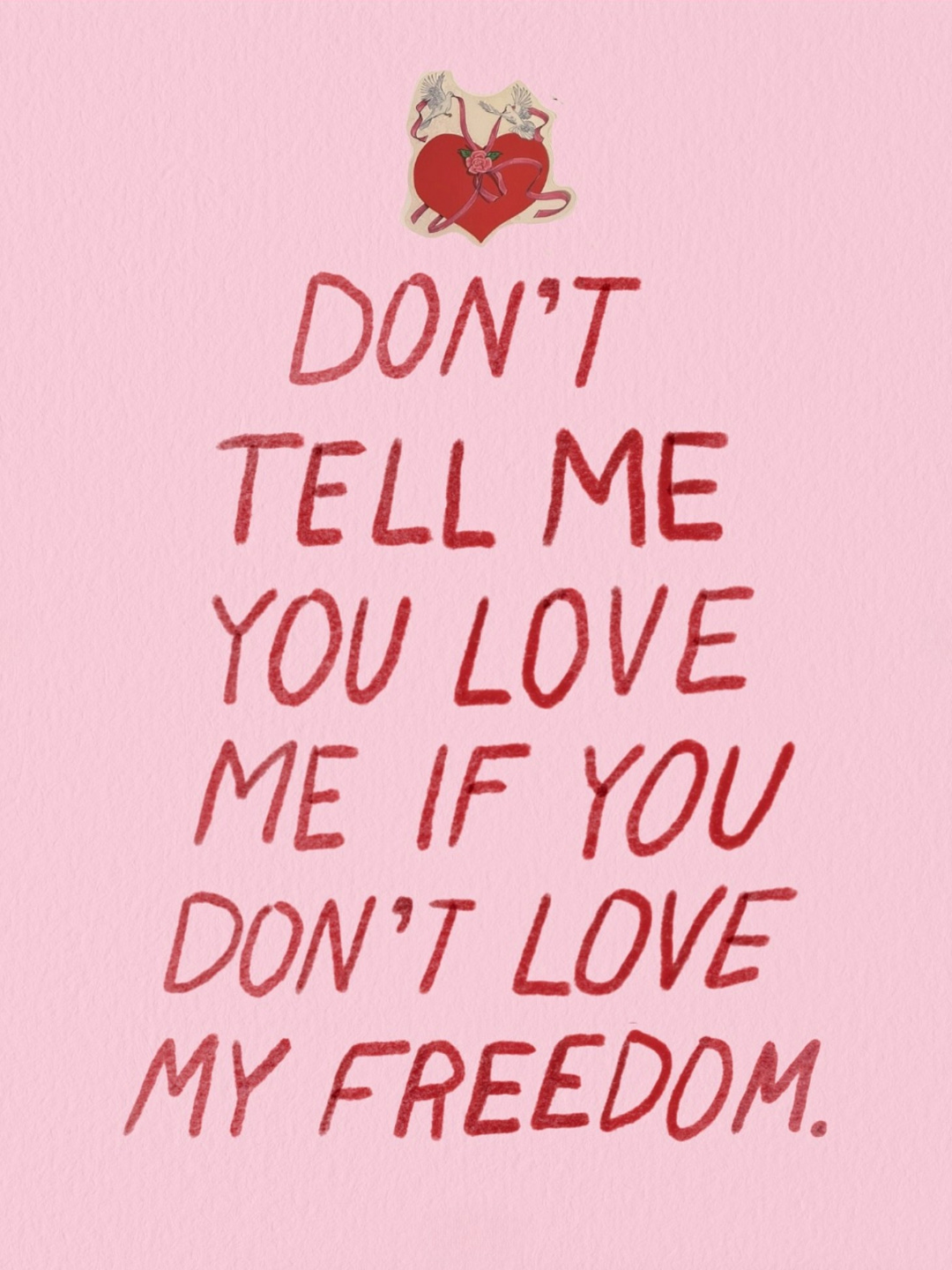
When I was younger, I believed love was a feeling, something that overcame you and made you want to do things for another person (and expect them to do things for you). Eventually, I learned that kind of thinking is a trap. Feelings are fleeting and fickle, and they aren’t something you want to give that much power to.
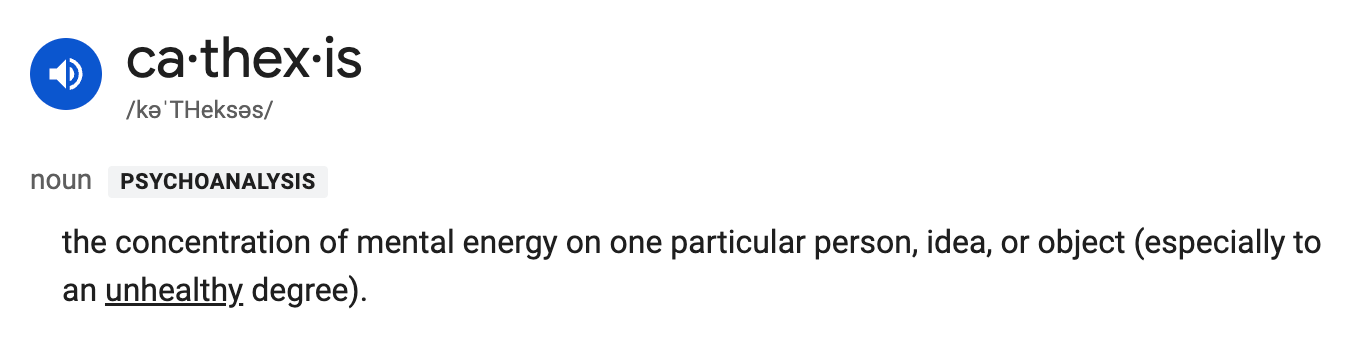
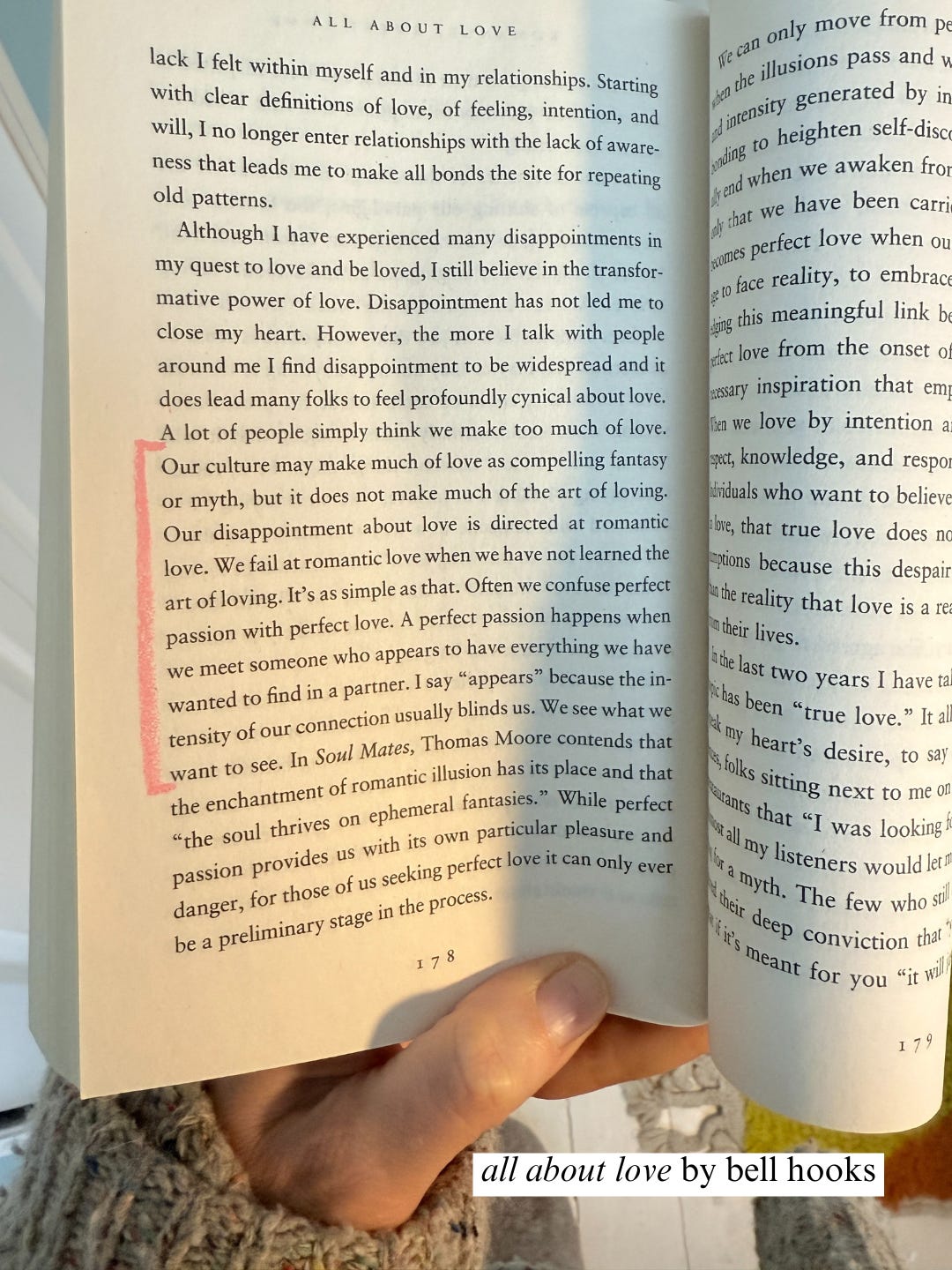
My inability to clearly define “love” drove me crazy for a really long time. Then I read bell hooks’ All About Love, and learned so much. hooks argues that we’ve confused love with cathexis, that rush of emotional investment, when really, love is a practice. It’s a combination of care, commitment, knowledge, responsibility, respect, and trust. It’s not a feeling that overtakes you. It’s a practice you commit to.
For so long, my definition of love was entirely about what I got out of it: how someone made me feel, whether they were meeting my needs, if they were showing up the way I wanted them to.
And if I didn’t feel they were meeting my expectations, I would pout, I would get upset. I would often not communicate clearly and expect them to read my mind. I thought love meant holding on tight, steering things toward what made me feel safe.
I’ve since learned that love is about working together toward mutual growth, and actually (openly + honestly) talking about what you both need. And when that growth together stops being possible, love is having the courage to walk away and choose freedom for both of you, even if it hurts.
Real love requires showing up with honesty and intention, and it applies to all your relationships, not just romantic ones.
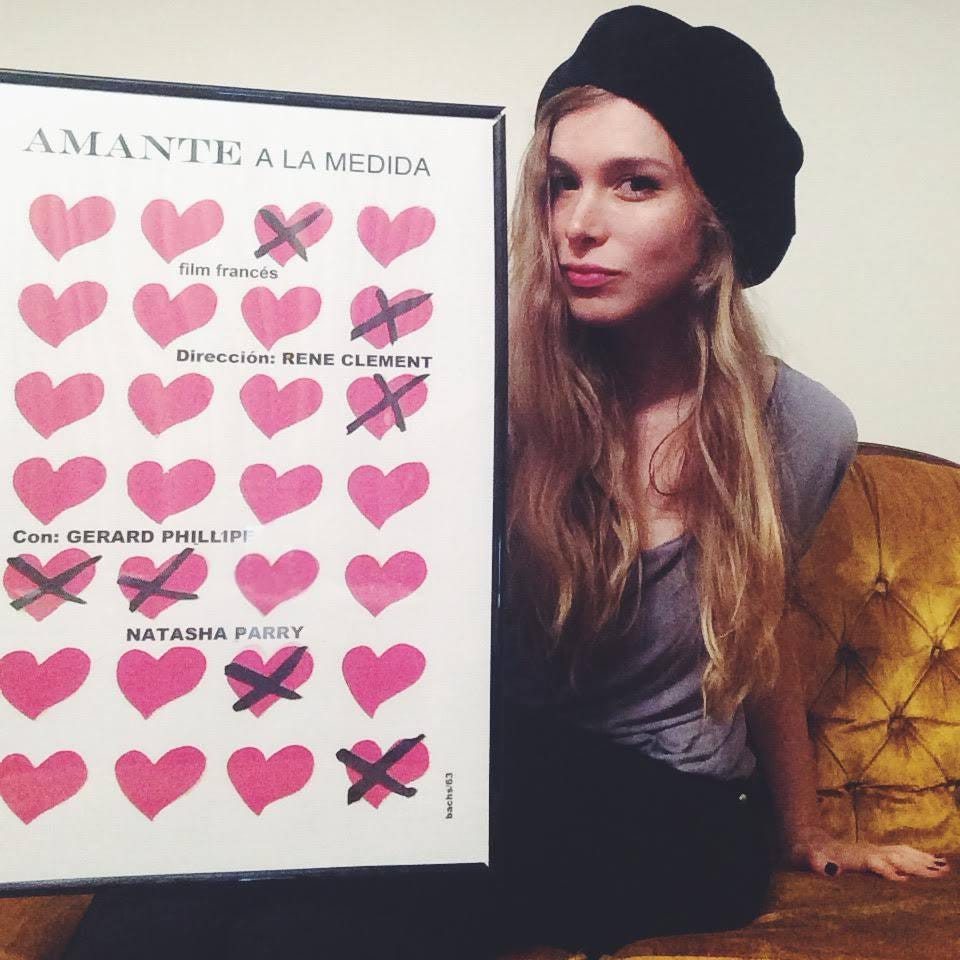
Maybe the biggest thing I’m working on is unlearning are the very things Valentine’s Day seems to push: that love should be loud, bright, and shiny. That it should feel effortless and overwhelming. That it’s something that happens to you rather than something you choose to practice every single day.
So this Valentine’s Day, I’m celebrating the loves in my life that require showing up (my puppy, my family, my community, my faith in something greater). I’m still learning what it means to love this way. I still mess up constantly. But for the first time, I feel like I’m building something more sustainable than that fleeting, intoxicating rush I used to chase.
Books that taught me so much about love
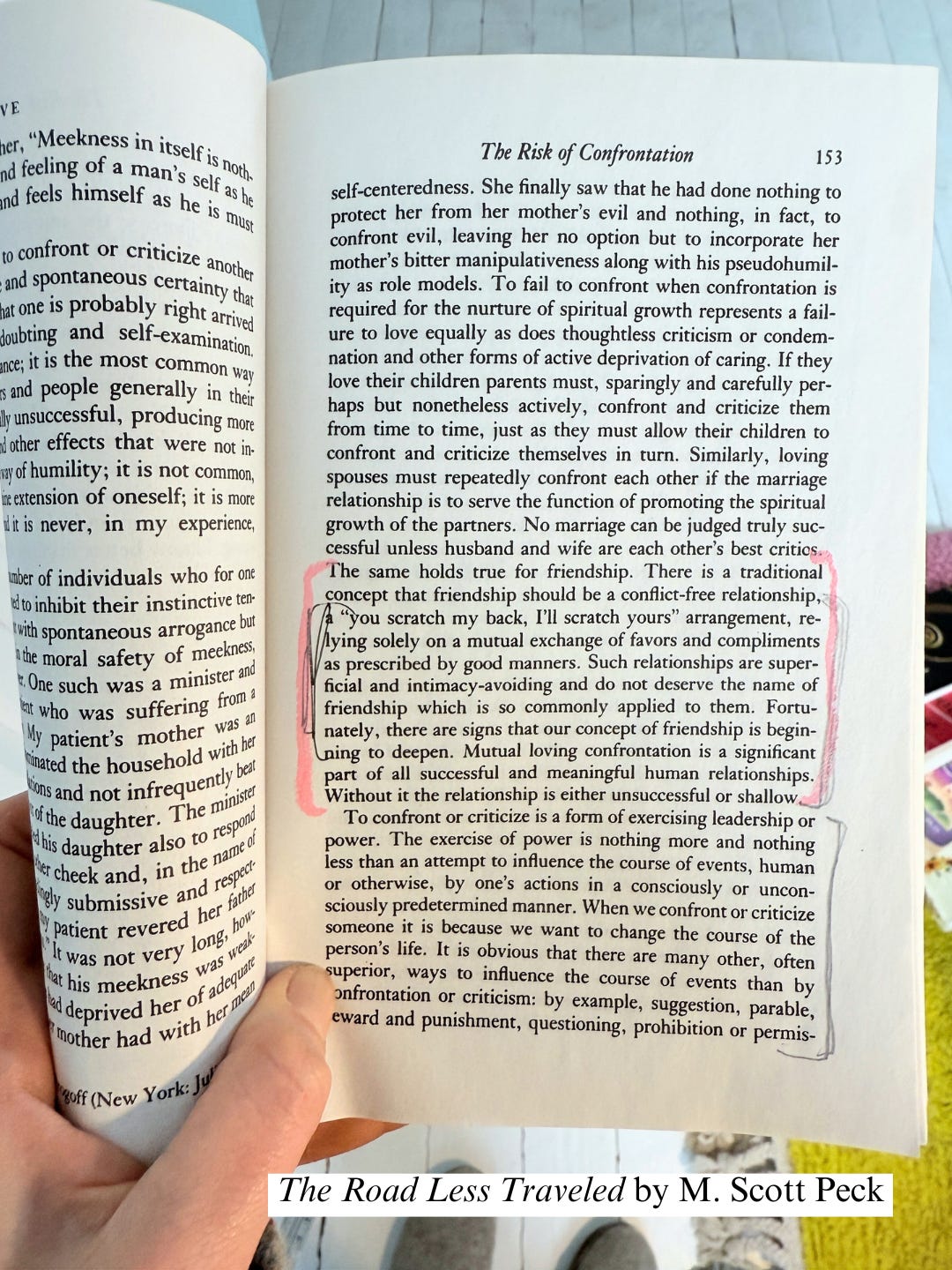
The Road Less Traveled by M. Scott Peck This is one of the most important books I’ve ever read in my life. I just recently reread it and it hit even harder the second time around. Peck defines love as “the will to extend oneself for one’s own or another’s spiritual growth,” which completely reframed how I approached relationships.
all about love by bell hooks hooks breaks down love into its actual components: care, commitment, knowledge, responsibility, respect, and trust. She helped me understand that what I’d been calling love was often just cathexis, that intoxicating rush of emotional investment. This book is accessible, compassionate, and honestly life-changing.
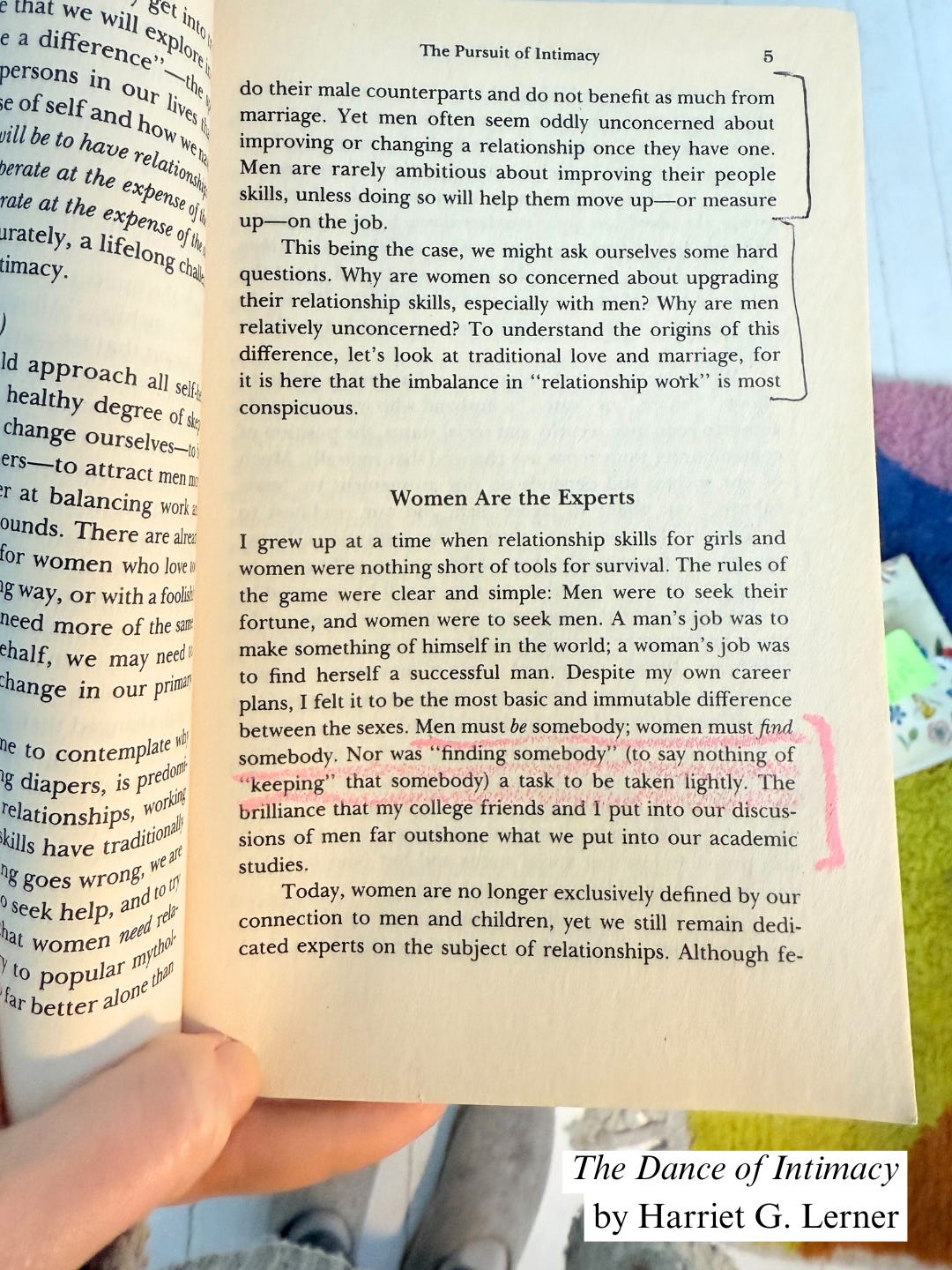
The Dance of Intimacy by Harriet Lerner. This book taught me that real intimacy requires being yourself, not merging with another person. She writes about how to stay connected to others while maintaining your own identity, which is something I’ve struggled with my entire life. Essential reading if you tend toward codependency.
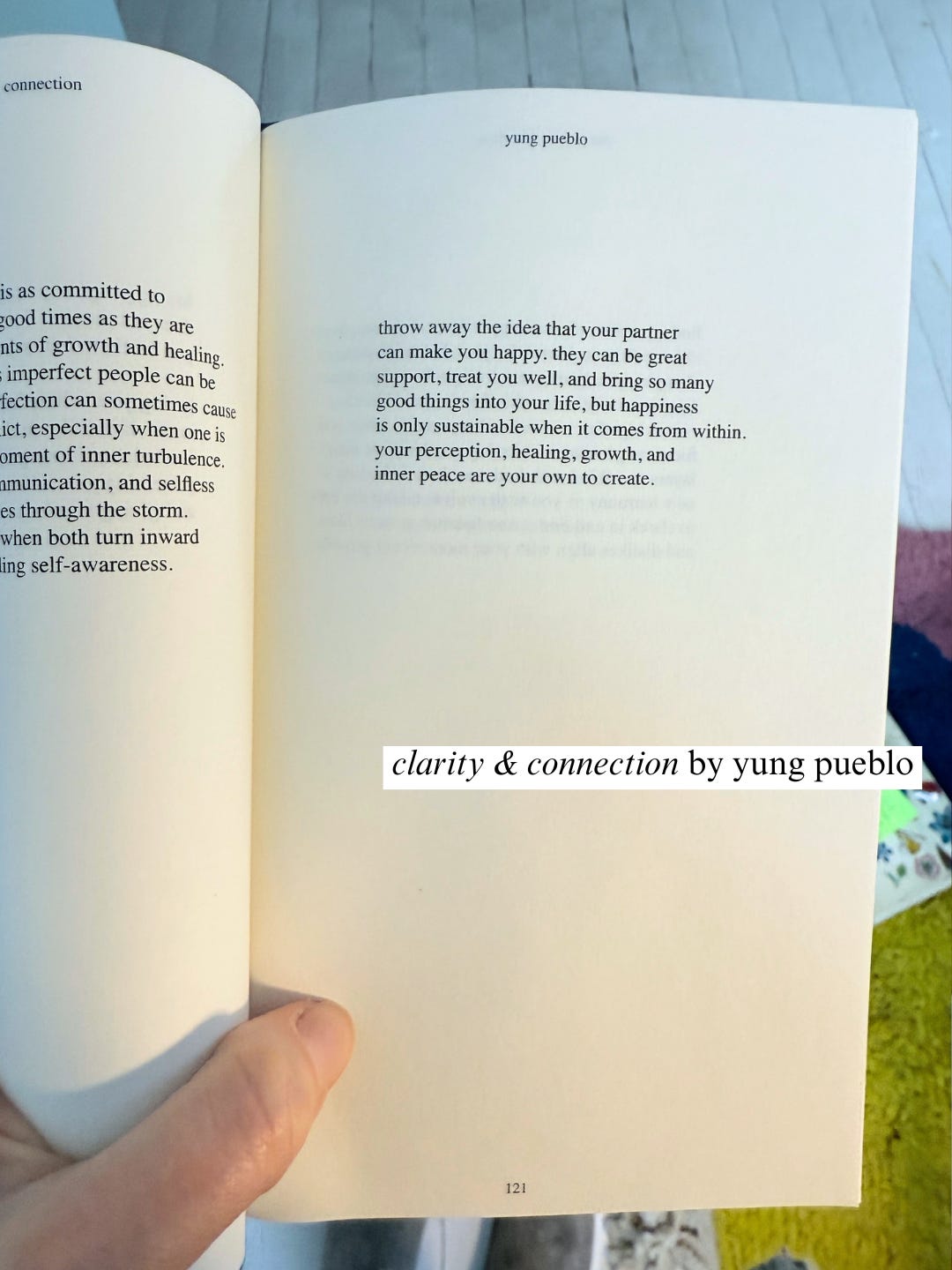
clarity & connection by yung pueblo yung pueblo writes about healing yourself so you can love others better, and about the difference between attachment and genuine connection. It’s the book I return to when I need a quick and easily digestible reminder about what healthy love looks like.
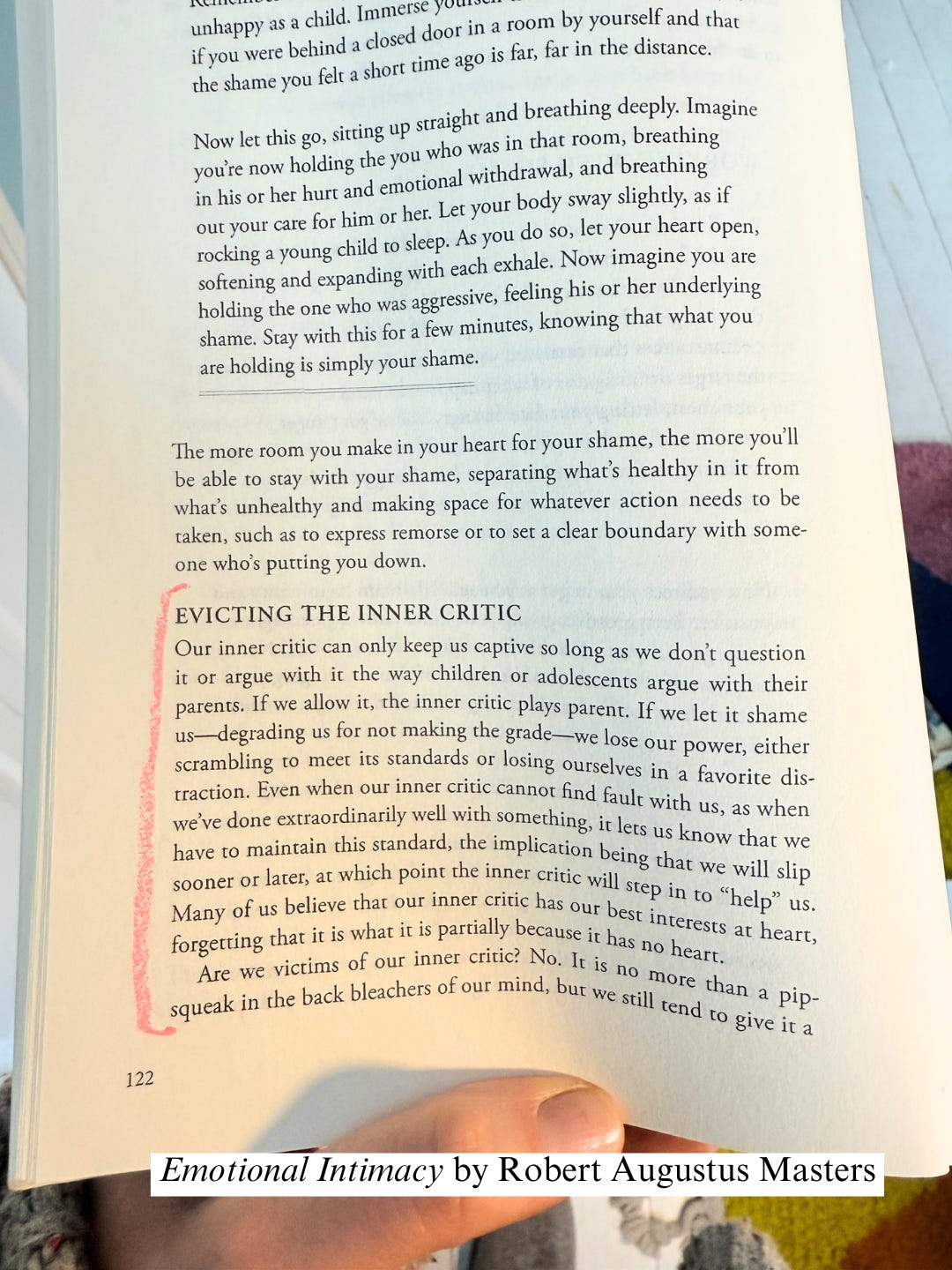
Emotional Intimacy by Robert Augustus Masters Masters guides you through the work of actually understanding what's happening emotionally inside you, so you can use your feelings as information instead of letting them yank you toward controlling behavior.
Happy Valentine's Day to my community. I appreciate you and always want to show up with love here.
xoVC